The Neolithic settlement of Choirokoitia, occupied from the 7th to the 4th millennium B.C., is one of the most important prehistoric sites in the eastern Mediterranean. Its remains and the finds from the excavations there have thrown much light on the evolution of human society in this key region. Since only part of the site has been excavated, it forms an exceptional archaeological reserve for future study.
Located in the District of Larnaka, about 6 km from the southern coast of Cyprus, the Neolithic settlement of Choirokoitia lies on the slopes of a hill partly enclosed in a loop of the Maroni River. Occupied from the 7th to the 5th millennium B.C., the village covers an area of approximately 3 ha at its maximum extent and is one of the most important prehistoric sites in the eastern Mediterranean. It represents the Aceramic Neolithic of Cyprus at its peak, that is the success of the first human occupation of the island by farmers coming from the Near East mainland around the beginning of 9th millennium.
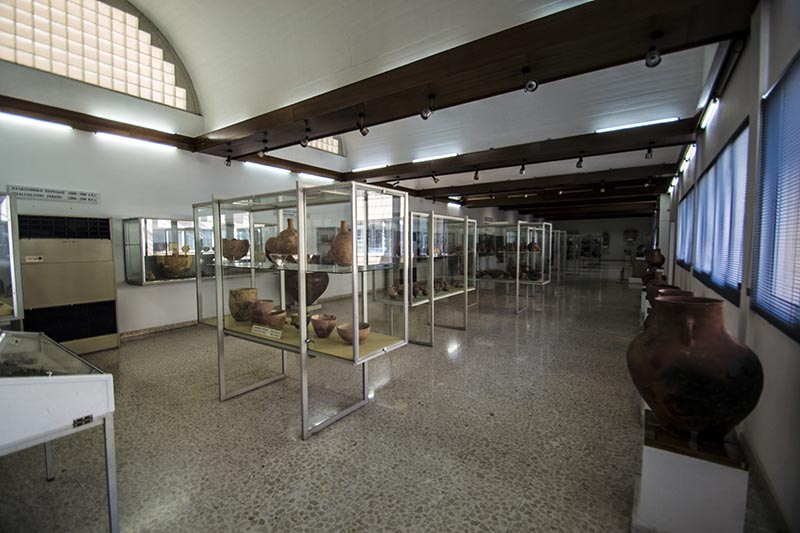
Excavations have shown that the settlement consisted of circular houses built from mudbrick and stone with flat roofs and that it was protected by successive walls. A complex architectural system providing access to the village has been uncovered on the top of the hill. The achievement of such an impressive construction, built according to a preconceived plan, expresses an important collective effort, with few known parallels in the Near East, and suggests a structured social organisation able to construct and maintain works of a large scale for the common good. A house consisted of several circular buildings equipped with hearths and basins arranged around a small courtyard where domestic activities took place. The houses belonged to the living, as well as to the dead who were buried in pits beneath the rammed earthen floors. Among the finds such as flint tools, bone tools, stone vessels, vegetal and animal remains, noteworthy are the anthropomorphic figurines in stone (one in clay), which point, together with funerary rituals, to the existence of elaborate beliefs. Since only part of the site has been excavated, it forms an exceptional archaeological reserve for future study.


.jpg)