counter

Εμφάνιση αναρτήσεων με ετικέτα ruins. Εμφάνιση όλων των αναρτήσεων

Κυριακή 17 Νοεμβρίου 2024

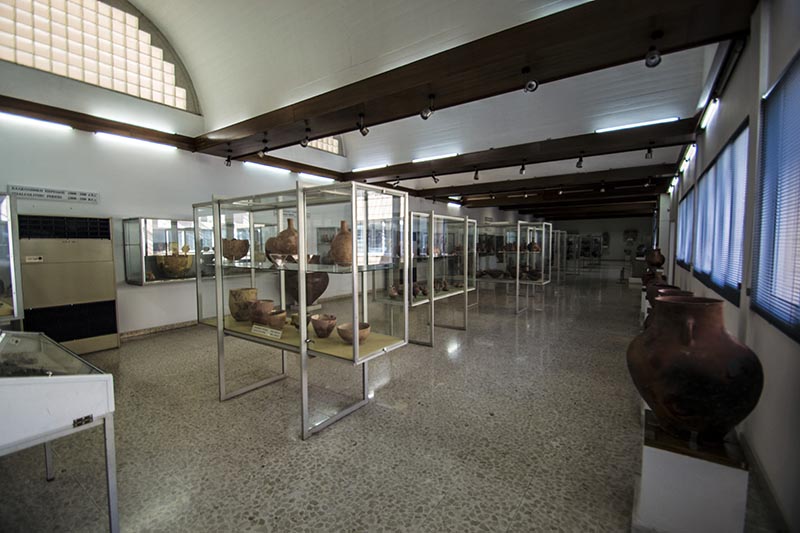
Limassol museum


Capital in marble Cypro-archaic period 600-475bc


Tools of Neolithic and Chalcolithic period 5800-2500 BC

Terracotta figurine of Eros-Hellenistic period 2nd-1st cent BC


Cast of a car Burial. Late Cypro-PPNB Neolithic (7500-7000). Parekklisslisia-Sillourokampos. The site of P-S has provided significant information about the early history of cat domestication. Cat bones dated to 10300 BP (before present) testified that small felids were introduced to Cyprus by boat. This indicates that they were already human companions in the Levant about 5000 years before the beginning of cat domestication in Egypt. A complete cat skeleton was also found, dated to 9500-9000 BC, accompanying a human burial. This provides evidence that the cat had an important role in the imagination, as well as in the everyday life of early Neolithic people, as early as the dawn of agriculture. 

Terracotta figurine of a figure reclining on a cart. Cypro-Archaic period (8th-5th c. BC)-Amathus tomb 199/66


Necklace with gold beads, pearls and semi-precious stones. Roman period (50BC-395 AD) Amathus Tomb 629/1


Τετάρτη 31 Ιανουαρίου 2024

Holy cross church at Anogyra

Situated southwest of the village of Anogyra, the Church of Timiou Stavrou is built over the foundations of an early Christian basilica. At the end of the 15th century, the present church was built overthe foundations of older churches.

In its present form, the monastery is an intricate architectural complex. Its barrel-vaulted church with a single nave and dome is decorated with wall-paintings in the Palaiologan style which, despite marked wear and tear, remain exceptional examples of Palaiologan painting in Cyprus.

The village itself is located halfway between Lemesos (Limassol) and Pafos (Paphos), 400 metres above sea level, and retains its traditional character and local customs. Surrounded by carob orchards, the ‘black gold’ of the island and the traditional sweet made from it - ‘pasteli’ - are an important part of the village’s history.


Πέμπτη 14 Σεπτεμβρίου 2023

The ancient stadium of Kourion

 Kourion was an important city-kingdom in antiquity and stands as one of the most impressive archaeological sites in Cyprus.

Located 20km west of Lemesos (Limassol), on the road to Pafos (Paphos), Kourion Stadium is the only ancient stadium found in Cyprus. Dating back to the 2nd century, the stadium had a capacity for 6.000 spectators and was the site of pentathlon events in ancient times.

The site is free admission.


Τετάρτη 15 Ιανουαρίου 2020

Cyprus Museum part 1

The Cyprus Museum is the oldest and largest archaeological museum in Cyprus. The museum houses artefacts discovered during numerous excavations on the island. The museum is home to the most extensive collection of Cypriot antiquities in the world and is located on Museum Street in central Nicosia
snake statue

Neolithic period


Plank-shaped figurines

kissing doves

Κυριακή 15 Σεπτεμβρίου 2019

Berengaria abandoned hotel at Prodromos 1

from https://www.cyprusbeat.com :
"The Berengaria Hotel opened its doors in 1931 and closed down in 1984. It now stands desolate, derelict and its stone structure is beginning to crumble. During its time, it was the hidden jewel of the mountains as it was a luxurious hotel hosting visitors such as Pharouk, the King of Egypt and Ezer Vaisman president of Israel as well as top businessmen of the time. It was a mountain resort with a casino, night club and had state of the art furniture and decor.
What makes Berengaria so appealing until now is its peculiar history. The hotel itself closed down due to bad business and huge profit loss but underlying stories uncover secrets within the family. It was said that the original owner Mr. Kokkalos after having built a hotel by himself with an international presence and reputation went to waste. This was due to the fact that after his death, having passed it on to his three sons which were filled with greed, vanity and jealousy of each other caused the hotel to fail.
A special factor that added to the “creepiness” of the hotel was the fact that furniture, beds and crockery as well as clothes were still lying around the hotel with old postcards all over the entrance of the hotel. However after it was bought in order to be renovated all of this was removed and what is now left is the structure of the hotel.[...]"


Τρίτη 15 Ιανουαρίου 2019

Kourion archaeological site pt. 1

Kourion  was an important ancient city-state on the southwestern coast of Cyprus. The acropolis of Kourion, located 1.3 km southwest of Episkopi and 13 km west of Limassol, is located atop a limestone promontory nearly one hundred metres in height along the coast of Episkopi Bay. The Kourion archaeological area lies within the British Overseas Territory of Akrotiri and Dhekelia and is managed by the Cyprus Department of Antiquity.
for more info:  https://en.wikipedia.org/wiki/Kourion