counter

Εμφάνιση αναρτήσεων με ετικέτα history. Εμφάνιση όλων των αναρτήσεων

Παρασκευή 2 Ιανουαρίου 2026

Choirokitia Cyprus

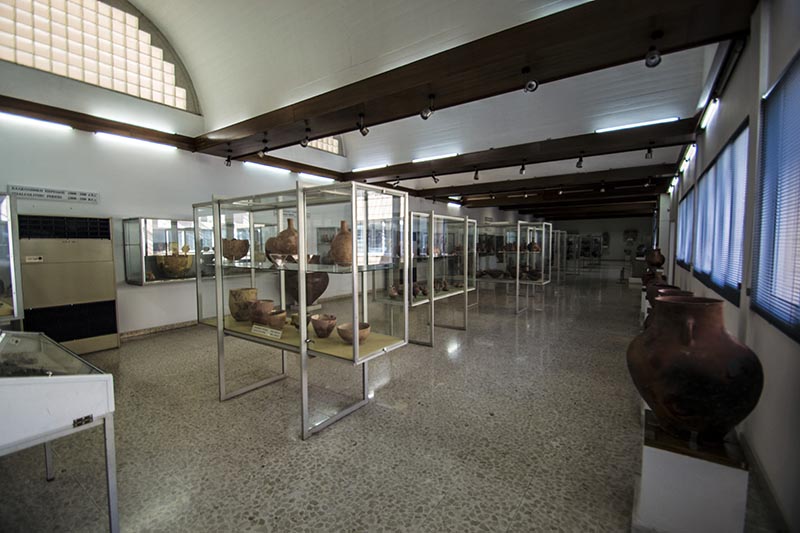
 The Neolithic settlement of Choirokoitia, occupied from the 7th to the 4th millennium B.C., is one of the most important prehistoric sites in the eastern Mediterranean. Its remains and the finds from the excavations there have thrown much light on the evolution of human society in this key region. Since only part of the site has been excavated, it forms an exceptional archaeological reserve for future study.

Located in the District of Larnaka, about 6 km from the southern coast of Cyprus, the Neolithic settlement of Choirokoitia lies on the slopes of a hill partly enclosed in a loop of the Maroni River. Occupied from the 7th to the 5th millennium B.C., the village covers an area of approximately 3 ha at its maximum extent and is one of the most important prehistoric sites in the eastern Mediterranean. It represents the Aceramic Neolithic of Cyprus at its peak, that is the success of the first human occupation of the island by farmers coming from the Near East mainland around the beginning of 9th millennium.

Excavations have shown that the settlement consisted of circular houses built from mudbrick and stone with flat roofs and that it was protected by successive walls. A complex architectural system providing access to the village has been uncovered on the top of the hill. The achievement of such an impressive construction, built according to a preconceived plan, expresses an important collective effort, with few known parallels in the Near East, and suggests a structured social organisation able to construct and maintain works of a large scale for the common good. A house consisted of several circular buildings equipped with hearths and basins arranged around a small courtyard where domestic activities took place. The houses belonged to the living, as well as to the dead who were buried in pits beneath the rammed earthen floors. Among the finds such as flint tools, bone tools, stone vessels, vegetal and animal remains, noteworthy are the anthropomorphic figurines in stone (one in clay), which point, together with funerary rituals, to the existence of elaborate beliefs. Since only part of the site has been excavated, it forms an exceptional archaeological reserve for future study.


Κυριακή 17 Νοεμβρίου 2024

Limassol museum


Capital in marble Cypro-archaic period 600-475bc


Tools of Neolithic and Chalcolithic period 5800-2500 BC

Terracotta figurine of Eros-Hellenistic period 2nd-1st cent BC


Cast of a car Burial. Late Cypro-PPNB Neolithic (7500-7000). Parekklisslisia-Sillourokampos. The site of P-S has provided significant information about the early history of cat domestication. Cat bones dated to 10300 BP (before present) testified that small felids were introduced to Cyprus by boat. This indicates that they were already human companions in the Levant about 5000 years before the beginning of cat domestication in Egypt. A complete cat skeleton was also found, dated to 9500-9000 BC, accompanying a human burial. This provides evidence that the cat had an important role in the imagination, as well as in the everyday life of early Neolithic people, as early as the dawn of agriculture. 

Terracotta figurine of a figure reclining on a cart. Cypro-Archaic period (8th-5th c. BC)-Amathus tomb 199/66


Necklace with gold beads, pearls and semi-precious stones. Roman period (50BC-395 AD) Amathus Tomb 629/1


Δευτέρα 1 Ιανουαρίου 2024

replica of the giant jar of Amathunta


The original jar was stolen by French architect Edmond Duthoit and at 1865 was transferred to France. Today it is exhibited at Louvre museum. This jar is a faithful replica of the stolen original. 


Παρασκευή 1 Οκτωβρίου 2021

Local archaeological Kourion museum part 1

 Kourion Archaeological Museum is housed in a traditional building that was once the private residence of the late George McFadden, Assistant Director of the University of Pennsylvania, who led extensive archaeological research at the ancient city of Kourion and its environs from 1934 -1953.

The museum opened in 1969 and consists of two exhibition halls that showcase finds from the nearby archaeological sites, including red polished ware of the Early Bronze age, pottery and golden jewellery of the Mycenaean era, and a large number of offerings from the nearby Sanctuary of Apollon Hylates.

The skeletal remains of inhabitants of the city who lost their lives in the 4th century earthquakes constitute one of the most impressive exhibits of the museum, and were found in situ in a Roman house.

Region:Lemesos (Limassol)
Address:Episkopi village, 14km west of Lemesos on the road towards Pafos (Paphos)
GPS coordinates:Lat: 34.669656 Lon: 32.901015
Contact No:Tel: +357 25 932 453
Operating Hours:Monday - Friday: 08:00 - 15:30
Closed on weekends.
Operating Period:All year round.
Closed on Public Holidays.
Entrance Fee:€2,50
For organised groups consisting of more than 10 persons there is a 20% reduction on the entry fees.
The Department of Antiquities can issue special entry cards for all its museums and ancient monuments: One (1) day entry cards - €8,50, three (3) day entry cards - €17,00, seven (7) day entry cards - €25,00.
Website:www.mcw.gov.cy/da
 Opening and closing times as well as entrance fees, are subject to alterations without notice. Visitors are advised to check before visiting.
Sepulchral reliefe-Limestone Cypro-archaic I period 750-600 BC


Engraved plaque-Marble-Sanctuary of Apollo Hylates Roman period 3rd cent AD
Dedicatory inscription to Apollo Hylates, by Claudianos' son of Thyllicos who was cured of his illness by the God.

Bones from middle-aged man

Lamp 4th century AD

Torso of God Hypnos. Marble. Sanctuary of Apollon Hylates Roman period 30 BC

Deer statuette

Lamps